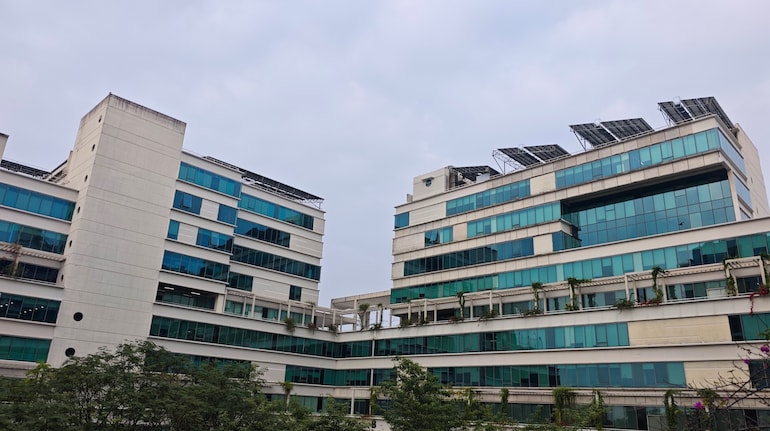
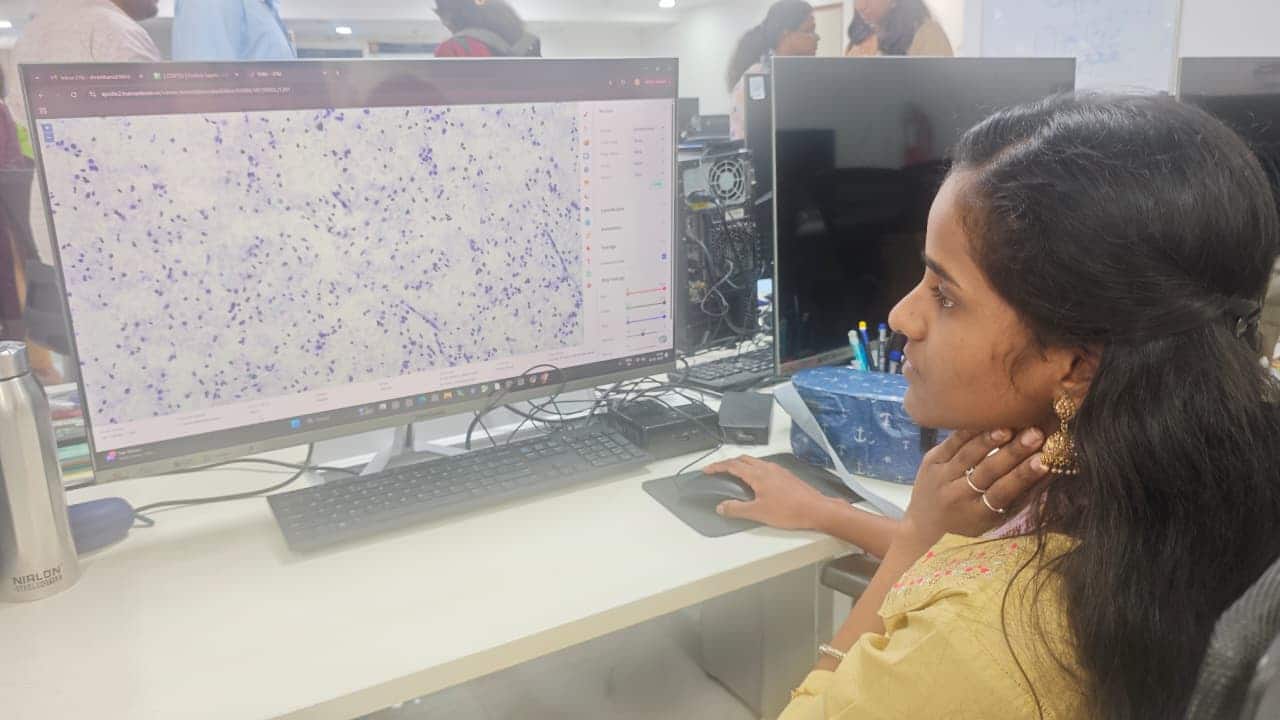
On a computer screen inside a laboratory at IIT Madras (known as the Sudha Gopalakrishnan Brain Centre), a human brain slowly comes into focus, not as a scan or an illustration, but as millions of coloured fragments stitched together layer by layer.
A researcher zooms in, but what looks like abstract art resolves into cells. Zoom further, and individual neurons appear, arranged in intricate patterns formed decades before the person whose brain it once was learned to speak, remember, or dream.
This is not medical imaging but reconstruction. “It’s like an address system for the brain,” Infosys co-founder Kris Gopalakrishnan told Moneycontrol, explaining why he chose to back one of India’s most ambitious scientific bets.
Without a detailed map, he argues, you cannot diagnose precisely, treat effectively, or even fully understand how the brain changes with age and disease.
Inside IIT Madras, that map is now being built, scientists are attempting something neuroscience has pursued for more than a century but never fully achieved: building a complete, cellular-level map of the human brain across an entire lifetime.
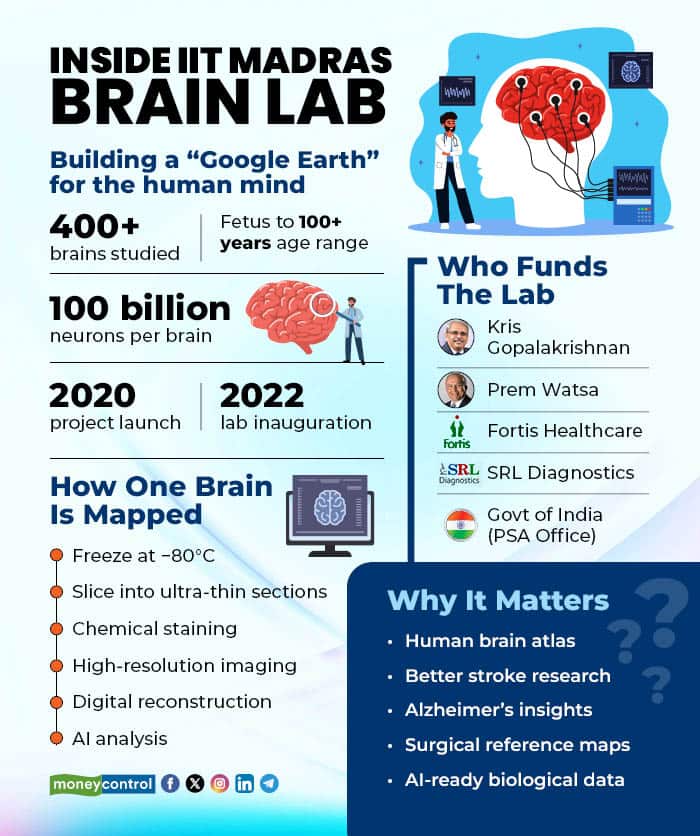
Nearly 400 donated human brains, from second-trimester fetuses to centenarians, now form the foundation of what researchers describe as a “Google Earth for the human mind”. This is a reference atlas that could fundamentally change how scientists understand ageing, disease, and consciousness itself.
The lab where engineering meets mortality
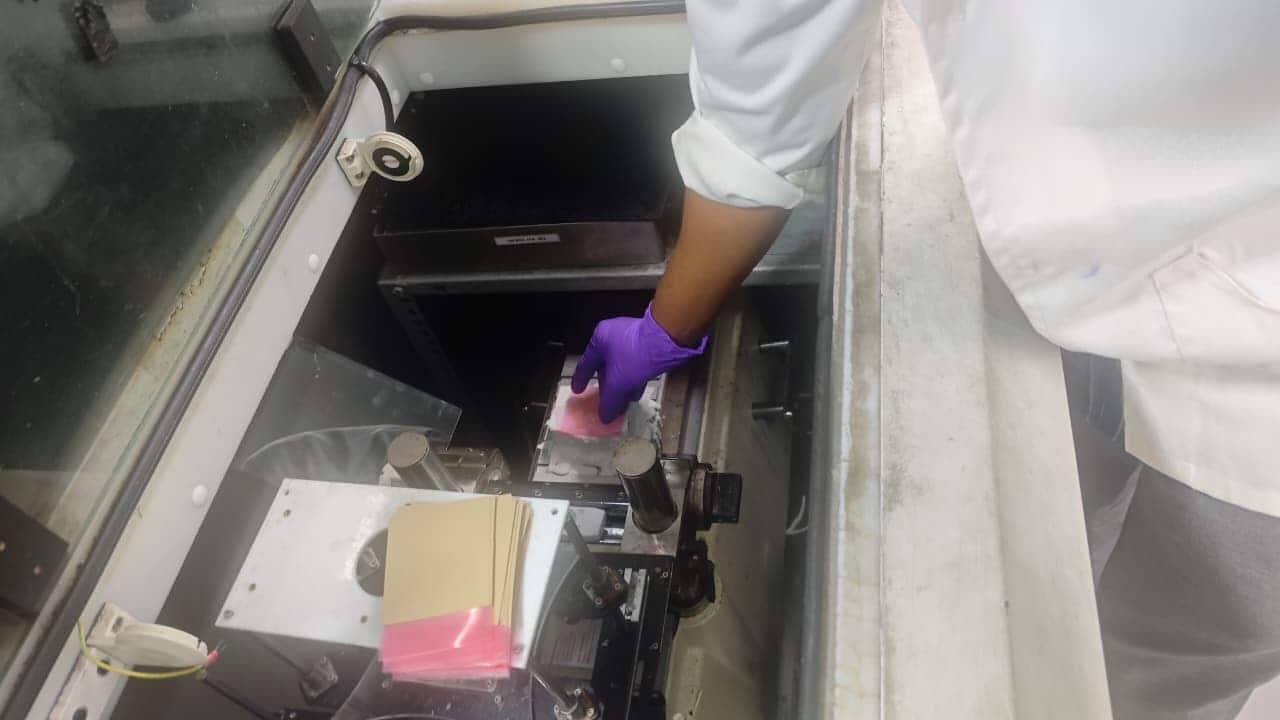
Donations arrive from hospitals, carefully preserved within hours after death, when the architecture of neurons and connections still remains intact. Scientists flush residual blood from tissue, preserve it chemically, and freeze it at nearly minus 80 degrees Celsius.
Only then does the real challenge begin.
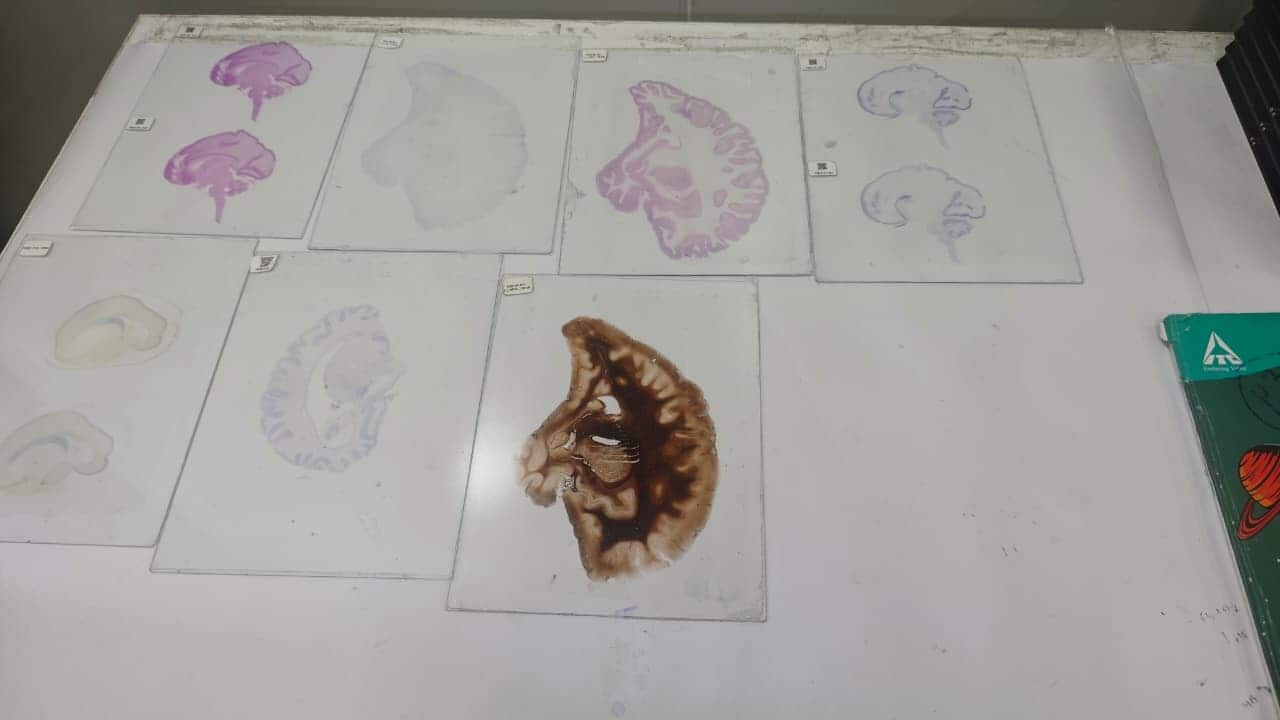
Human brains are fragile and enormous at the microscopic scale, and to study them cell by cell, researchers slice them into extremely thin sections, thinner than a strand of hair, stain each slice using specialised chemicals, and image them individually.
Thousands of slices later, software reconstructs the organ digitally.
Each brain generates petabytes of data, comparable to millions of movies. The result is a navigable dataset, allowing scientists to move through brain structures the way one navigates streets on a digital map.
“We are essentially reading the brain in unprecedented detail,” Mohanasankar Sivaprakasam told Moneycontrol, who leads the centre. “Only when you see structure at this scale can you begin to understand how the mind emerges.”
Skipping the world’s playbook
Most global brain-mapping projects began cautiously with mice, but here’s the problem: their brains are roughly 1,000 times smaller than humans and far easier to analyse.
To venture deeper, IIT Madras chose a riskier route.
Instead of progressing gradually, researchers leapfrogged directly to mapping human brains, betting that advances in engineering and computation could solve problems biology alone could not.
That decision surprised many in the global neuroscience community.
“It cannot be a boutique effort mapping small pieces and hoping they add up,” said Tomasz Nowakowski, associate professor at the University of California, who collaborates with the centre. “What they’ve built allows scientists to look at the whole brain at once. That scale changes the questions you can ask.”
The gamble worked, and within a few years, the lab produced one of the world’s most detailed “anatomical datasets” of the human brain.
An international neuroscience journal described the effort as giving India “a seat at the table” in global brain mapping.
Why scientists need a map of the mind
Modern medicine can image a living brain through MRI scans. But those images show structures only at millimetre resolution. A neuron is about ten microns wide, a gap that matters a lot.
Doctors treating brain stroke or Alzheimer’s disease often lack a precise baseline of what a healthy brain should look like at cellular resolution across different ages.
Rebecca Folkerth, a neuropathologist at the Icahn School of Medicine in New York, calls the IIT Madras capability a turning point.
“What they’ve made possible is looking at essentially all the cells in an entire brain,” she said. “Traditionally, we study tiny samples. Here, you understand spatial relationships across the whole organ.”
That difference could help researchers identify which regions of damaged brain tissue are still salvageable during stroke treatment or how neurodegenerative diseases evolve over decades.
A map funded differently
The Brain Lab is unusual not only scientifically but financially.
Unlike most frontier neuroscience projects that rely primarily on state funding, this one has been built through a rare mix of philanthropy, corporate social responsibility funding, and government backing.
The centre is primarily supported by Infosys co-founder and IIT Madras alumnus Kris Gopalakrishnan and Fairfax Financial Holdings founder Prem Watsa.
In addition to funding the centre, Gopalakrishnan has also endowed three Distinguished Chairs in Computational Brain Research at IIT Madras, committing Rs 30 crore to strengthen long-term scientific leadership in the field.
Watsa donated $5 million in 2024 through the Canadian Friends of IIT Madras to expand research activities.
Additional funding has come through CSR grants from Fortis Healthcare and SRL Diagnostics, while the Office of the Principal Scientific Adviser to the Government of India supports the centre’s high-resolution brain imaging programme.
Because brain science itself remains an emerging field globally, Gopalakrishnan argued, India was not significantly behind established powers and could still lead.
The brain, he often highlights, remains “the most powerful computer in the world,” running on about 20 watts of energy, far more efficient than modern AI systems.
Turning biology into data
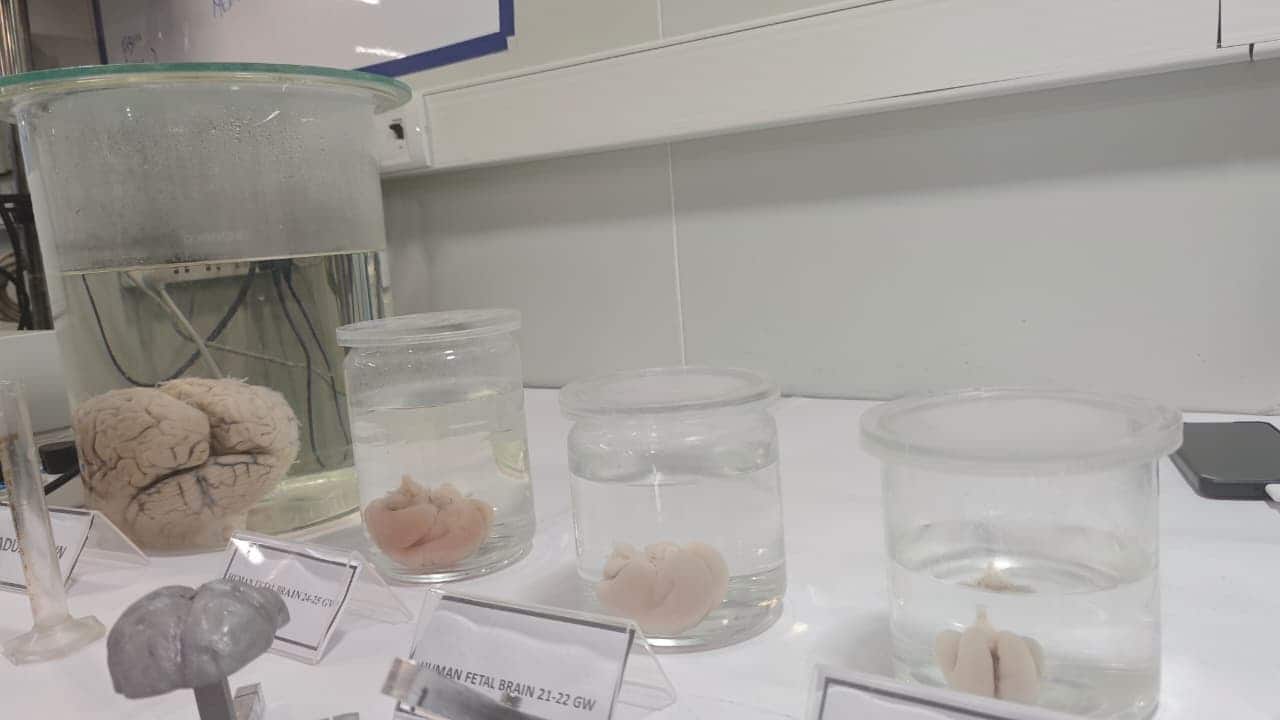
In another room, preserved fetal brains sit in glass containers beside adult specimens, representing stages of development rarely studied together.
Across nearby workstations, researchers colour-code structures digitally, converting biology into analyzable datasets.
This is where artificial intelligence (AI) enters the story.
For decades, biology struggled to produce datasets large enough for machine learning. Whole-brain cellular maps change that equation. AI systems can now analyse patterns across enormous volumes of biological data, potentially revealing relationships invisible to human observers.
Nowakowski calls this convergence historic. “For the first time, biology is generating data at a scale where AI can truly contribute,” he said.
The long horizon of discovery
No one here promises immediate cures.
Short-term gains may include better diagnostic frameworks and a deeper understanding of how brains change with age. Long-term ambitions stretch further: decoding Alzheimer’s progression and redefining neurological disease classification.
Success, Folkerth says, will come when other laboratories worldwide adopt the technology pioneered here.
“This is just the beginning,” she said.
Also, read: Deep tech VCs tap IIT-Madras as consultancy revenue crosses Rs 2,800 crore


Discover the latest Business News, Sensex, and Nifty updates. Obtain Personal Finance insights, tax queries, and expert opinions on Moneycontrol or download the Moneycontrol App to stay updated!
Find the best of Al News in one place, specially curated for you every weekend.
Stay on top of the latest tech trends and biggest startup news.